

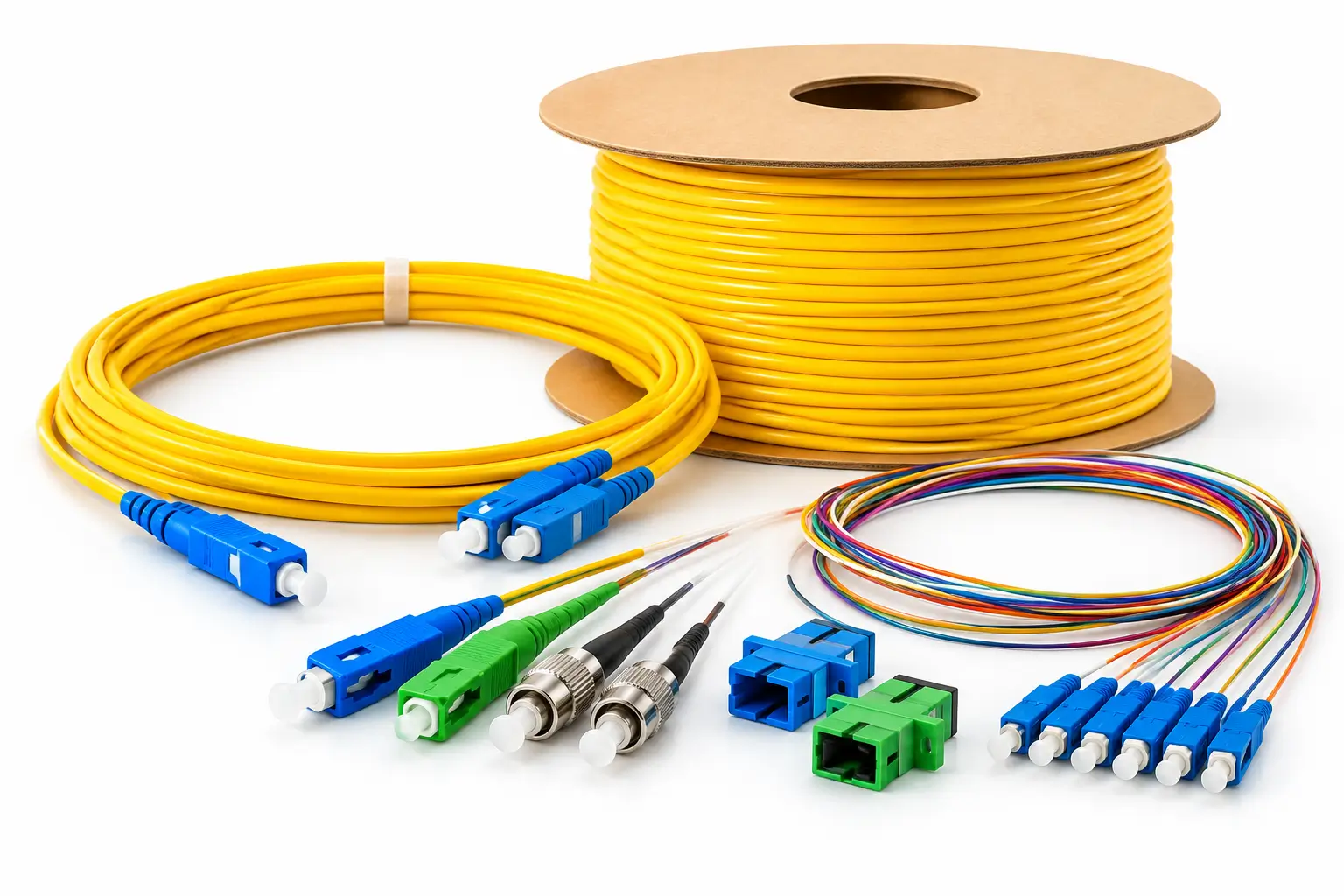
Fiber Optic Samples
A Fiber Optic sample order looks like a small step: a few pieces, a courier box, a quick test. In reality, it is the most informative purchase you will make with a new supplier. Fiber Optic Samples shows whether the product matches the datasheet, and it reveals how the company communicates, documents, and delivers when the stakes are still low.
The catch is that a poorly planned sample teaches you almost nothing. Wrong connector, vague spec, no test plan, and you learn only that you wasted two weeks. This guide covers what to settle before you click order, and how to get real answers from what arrives.
1. Write Down What “Good” Means
Before talking to any supplier, define your acceptance criteria in one short document.
- Where it will be used: FTTH, data center, enterprise LAN, CATV, or telecom
- Fiber and connector: singlemode or multimode, SC, LC, FC, UPC or APC
- Target performance: maximum insertion loss, minimum return loss, temperature range
- Environment: indoor, outdoor, aerial, or underground
When the pass mark is written down, testing becomes objective. Without it, a mediocre sample can look fine simply because nobody defined fine.
2. Confirm the Exact Specification
Most Fiber Optic Samples disputes begin with a mismatch that was avoidable. Ask the supplier to confirm, in writing, every detail that matters for your product.
For pigtails and patch cords, that means connector type, polish, fiber standard (such as G652D or OM3), cable diameter, jacket material, and length. Polish deserves special attention. Mating APC with UPC creates high loss and can scratch end-faces, as explained in our guide to SC/UPC vs SC/APC.
For splitters, verify the technology, ratio, package style, and wavelength range. If you are choosing between formats, our article on blockless, cassette, and plug-in splitters helps narrow it down.
For boxes and enclosures, confirm port count, splice capacity, adapter type, IP rating, and material. Our fiber distribution box checklist lists the details worth asking about.
3. Ask for Numbers and Where They Come From
“Low loss” is a slogan. “0.2 dB typical, 0.3 dB maximum, tested per IEC standard” is a specification.
Ask whether published values are typical or guaranteed , and how they were measured. Request a test report for the product family, and ideally for the production batch your sample came from. A supplier who can share this quickly usually has a real quality process. One who hesitates may be reselling untested stock.
4. Verify Certifications Instead of Collecting Them
ISO 9001, RoHS, REACH, Telcordia GR-326, and CE appear on many websites. Appearing is not the same as being valid.
- Ask for the actual certificate files
- Check that the company name and address match your supplier
- Confirm the certificate is current and covers the product category
Some traders display certificates that belong to the factory they buy from. That is not always a problem, but you should know who is really making the product.
5. Get Fiber Optic Samples Terms in Writing
Unclear terms cause most post-sample friction. Settle these points by email:
- Is the Fiber Optic Samples free, paid, or refundable against a bulk order?
- Who pays courier costs, and which carrier is used?
- How many pieces per model are allowed?
- What is the lead time, and is there a tracking number?
- What happens if the sample is defective?
It is a small effort now that avoids an argument later.
6. Match the Fiber Optic Samples to the Real Order
A standard catalog sample can hide a problem if your final product is customized. If you plan OEM work, ask for a sample as close to the final configuration as possible: your length, your connector combination, your labeling, and your packaging.
Also ask about customization costs early, including logo marking, tooling fees, and minimum order quantity. Learning that your design needs a mold fee after the sample looks great is an unpleasant surprise.
7. Judge the Supplier, Not Only the Product
Your sample experience is a preview of the working relationship. Notice how the company behaves:
- Speed and clarity of replies. Slow, vague answers now rarely improve later.
- Technical depth. Can the team discuss return loss, bend radius, or splitter loss without reading from a script?
- Honesty about limits. A reliable supplier tells you what they cannot do.
- Manufacturing capability. Ask whether production is in-house or outsourced.
- References. Past projects or similar customers show real experience.
A good product from a poor communicator is still a risk, because problems will come eventually and communication decides how they are solved.
8. Plan the Testing Before the Box Arrives
Decide what you will check, with which equipment, and what result counts as a pass.
- Visual check: workmanship, labeling, packaging, dust caps
- End-face inspection: use a fiber microscope. Clean first if needed, following our connector cleaning guide
- Optical performance: measure insertion loss and return loss with a power meter or certified tester
- Longer assemblies: run an OTDR test to inspect splice and connector events
- Fit test: confirm the product mates with your existing adapters, panels, and boxes
- Handling check: test bend behavior and mechanical feel, respecting the bend radius limits
Record results with photos and keep the samples. If bulk quality ever shifts, you have a baseline to compare against.
9. Ask How Quality Will Hold at Scale
A great sample proves the factory can make one good unit. It says little about the thousandth. Before ordering in bulk, ask:
- What inspection and testing steps apply to every batch?
- Will production units match the sample exactly?
- What are lead times, payment terms, and warranty terms?
- How are defects handled?
Many buyers agree on a golden sample that both sides keep as the reference standard. If a dispute arises, the sample settles it.
Red Flags Worth Noticing
- Refusal to share test data or certificates
- Specs that change between emails
- Pressure to skip sampling and order in bulk
- Very low prices that leave no room for proper testing
- Photos that look copied from another brand
- Sample quality noticeably better than the datasheet promises, which may mean it was hand-picked
FAQ
Should I always order samples first?
Yes. A small sample is cheap compared with a failed bulk order.
How many samples should I request?
Two to five pieces per model is usually enough to check consistency.
Are free samples a good sign?
They are normal practice. Judge the product and the supplier’s behavior, not the price tag.
What if my sample fails testing?
Share the data with the supplier. A professional manufacturer will investigate and offer a corrected sample.
Can I request custom samples?
Often yes, though customization may add cost and lead time.
Conclusion
A fiber optic sample is a small order that answers big questions: does the product match its datasheet, does it fit your network, and can this supplier be trusted at scale? Define your requirements, confirm specs and certifications, agree on terms in writing, and test against clear criteria. With that approach, your bulk order rests on evidence.
Ready to evaluate? Explore our PLC splitters and fiber distribution & termination boxes, or contact XUI to request samples, specifications, or OEM options.
Tags: fiber optic samples, fiber optic supplier, OEM fiber, quality control, fiber testing
Internal links to add: product category pages, sample request page, OEM page
Note: This is a rewritten version of the earlier post on the same topic, with a new structure and slug. Publish only one version to avoid duplicate content.