

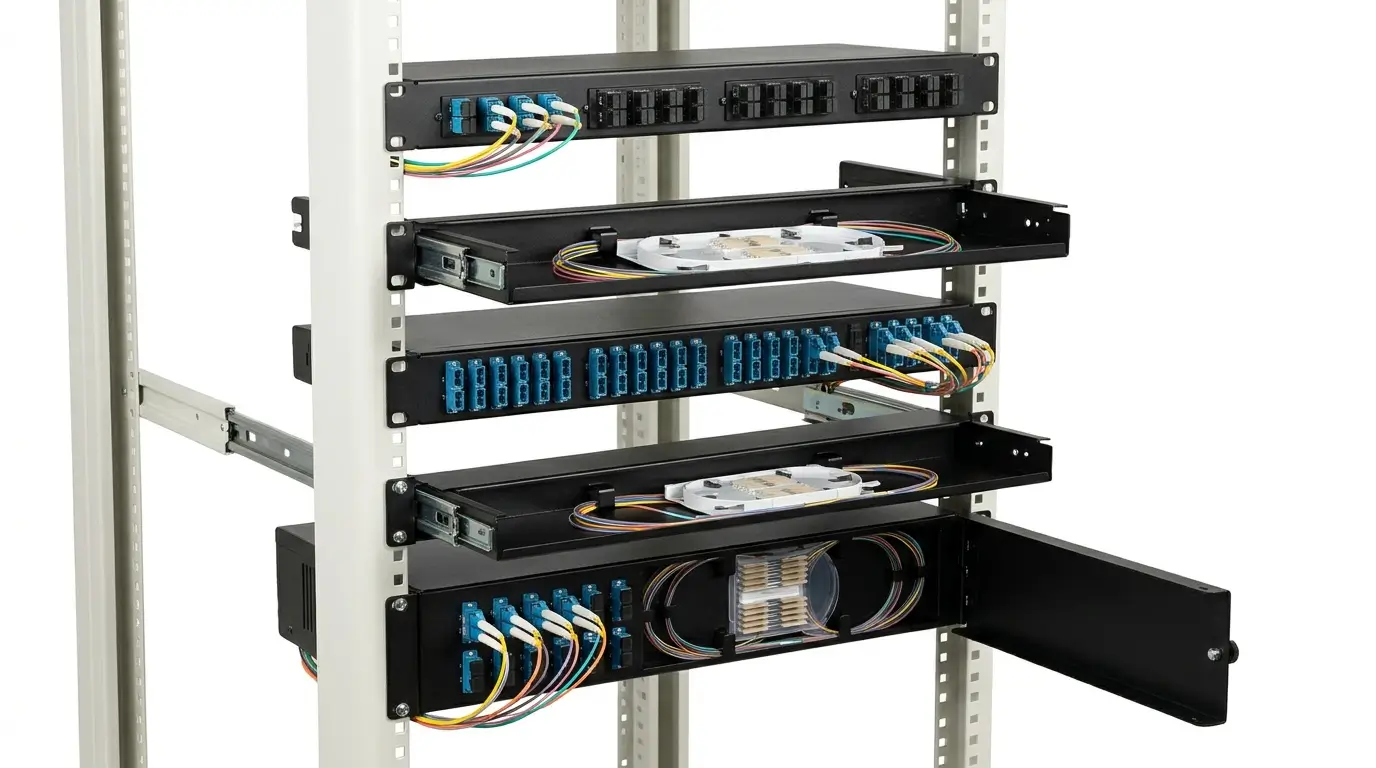
Fiber Patch Panel Guide: 1U vs 2U, Fixed vs Sliding vs Swing-out

Fiber Patch Panel Guide: 1U vs 2U, Fixed vs Sliding vs Swing-out Leave a comment

A fiber patch panel is the organized meeting point of your network. Incoming cables terminate here, and short patch cords connect them to active equipment. Choose well and moves, adds, and changes stay quick and tidy. Choose poorly and you end up with cramped racks, bent fibers, and hard-to-reach ports.

What a Fiber Patch Panel Does

A patch panel is a rack-mounted enclosure that holds fiber adapters (SC, LC, or MPO) on its front and manages the cables behind them. Inside, it typically provides:

  • Splice trays for fusion-spliced pigtails
  • Cable entry points with strain relief
  • Slack storage that protects the minimum bend radius
  • Labeling space for ports and fibers

The goal is simple: protect fiber, keep it organized, and make every port easy to identify and service.

1U vs 2U: Choosing by Height

Rack space is measured in units, where 1U equals 44.45 mm (1.75 in) of vertical height.

1U Fiber Patch Panels

A 1U panel is the compact choice. It suits locations where every rack unit counts.

  • Typical capacity: 12 to 24 fibers with SC adapters, and up to 48 fibers with LC duplex adapters
  • Best for: Small server rooms, telecom closets, branch offices, and FTTH distribution points
  • Advantages: Saves rack space, lower cost, lighter weight
  • Limitations: Less room for splice trays and slack, so large splicing jobs can feel tight

2U Fiber Patch Panels

A 2U panel offers more room for ports and internal management.

  • Typical capacity: 48 to 96 fibers, depending on adapter type and density
  • Best for: Data centers, central offices, and campus backbones
  • Advantages: Greater port capacity, more space for splice trays and cable routing, easier handling of thick cables
  • Limitations: Uses more rack space and costs more

A simple rule: If you need fewer than about 24 SC ports or 48 LC fibers, start with 1U. If you expect growth, high density, or heavy splicing, step up to 2U. A half-filled 2U panel often beats a full 1U that you must replace later.

Fixed vs Sliding vs Swing-out: Choosing by Access

Height tells you how much it holds. Style tells you how you reach it.

Fixed Panels

The enclosure is permanently mounted, usually with a removable top cover or rear access.

  • Pros: Lowest cost, simple, rigid construction
  • Cons: Awkward to reach inside, especially when installed in a full rack
  • Best for: Low-maintenance sites, small installations, and panels with few changes

Sliding Panels

A sliding panel pulls out of the rack on rails, like a drawer. The front and cover can be opened while the panel is extended.

  • Pros: Easy front and top access, convenient for splicing and cleaning, no need to remove the panel from the rack
  • Cons: Needs clear space in front of the rack to extend, and costs more than fixed
  • Best for: Frequently serviced racks, installations with high port counts, and technicians who need working room

Slack management on a sliding panel matters. Cables should move smoothly with the drawer without pulling or pinching.

Swing-out Panels

A swing-out panel pivots outward on a hinge, opening the interior toward the side. Some designs swing the entire front frame, giving access to the rear cable area.

  • Pros: Rear and side access without sliding the whole unit, helpful when space in front of the rack is limited, good for wall-mount and shallow cabinets
  • Cons: Hinge area needs side clearance, and designs vary between manufacturers
  • Best for: Wall cabinets, compact enclosures, and installations where sliding is impractical

Putting It Together: Common Scenarios

  • Small telecom closet, few changes: 1U fixed
  • FTTH distribution point, regular splicing: 1U sliding
  • Data center aggregation with LC density: 2U sliding
  • Wall-mounted cabinet with limited depth: 1U swing-out
  • Central office with frequent reconfiguration: 2U sliding or swing-out

Other Specifications That Matter

Beyond size and style, confirm these details before you buy:

  • Adapter type: SC, LC, FC, or MPO. Match your equipment and connector polish. If you use APC, see our guide to SC/UPC vs SC/APC.
  • Fully loaded or empty: Loaded panels come with adapters and pigtails installed, saving time. Empty panels give flexibility.
  • Material and finish: Cold-rolled steel with powder coating resists corrosion and offers strength.
  • Rack compatibility: Most panels fit standard 19-inch racks. Check depth, especially in shallow cabinets.
  • Cable management: Look for cable rings, bend-radius guides, and grounding points.
  • Labeling: Pull-out label areas or port numbering make documentation easier.

Installation and Maintenance Tips

  • Respect bend radius. Never route fiber tighter than the cable specification allows.
  • Leave service slack. Enough length to move the panel without tension prevents stress and breaks.
  • Clean before connecting. Inspect and clean every connector end-face.
  • Keep unused ports capped. Dust caps prevent contamination.
  • Label as you go. Clear port IDs save hours during troubleshooting.
  • Plan for growth. Leave a few spare ports and rack units.

For complete builds, pair patch panels with PLC fiber optic splitters and fiber distribution & termination boxes.

Conclusion

Pick the height based on port count and growth, and the style based on how often you will work inside the panel. A 1U sliding panel suits most compact, serviceable installs, a 2U panel handles dense and growing networks, and swing-out designs shine where front clearance is limited. Add proper bend-radius management and labeling, and your patch panel will stay reliable for years.

What does 1U mean in a patch panel?

One rack unit, or 44.45 mm of vertical rack space.

How many fibers fit in a 1U panel?

Typically 12 to 24 with SC adapters, and up to 48 with LC duplex adapters, depending on the design.

Are sliding panels better than fixed?

For frequently serviced racks, yes, because access is easier. For static installations, fixed panels are cheaper and perfectly adequate.

Can I use a fiber patch panel for both splicing and patching?

Yes. Panels with splice trays handle fusion-spliced pigtails and patch connections in one enclosure.

Do I need a 2U panel for LC connectors?

Not always. LC duplex adapters are compact, and many 1U panels reach 48 fibers. Choose 2U when you need more capacity or space for management.


Leave a Reply

Your email address will not be published. Required fields are marked *

XUI CO., LTD
Hello, Please leave your contact information, the staff will give you reply at the very first time.
  • 🇨🇳 China +86
  • 🇺🇸 United States +1
  • 🇨🇦 Canada +1
  • 🇬🇧 United Kingdom +44
  • 🇦🇪 UAE +971
  • 🇸🇦 Saudi Arabia +966
  • 🇩🇪 Germany +49
  • 🇫🇷 France +33
  • 🇮🇹 Italy +39
  • 🇪🇸 Spain +34
  • 🇷🇺 Russia +7
  • 🇮🇳 India +91
  • 🇯🇵 Japan +81
  • 🇰🇷 South Korea +82
  • 🇸🇬 Singapore +65
  • 🇲🇾 Malaysia +60
  • 🇮🇩 Indonesia +62
  • 🇻🇳 Vietnam +84
  • 🇹🇭 Thailand +66
  • 🇵🇭 Philippines +63
  • 🇹🇷 Turkey +90
  • 🇦🇺 Australia +61
  • 🇳🇿 New Zealand +64
  • 🇧🇷 Brazil +55
  • 🇲🇽 Mexico +52
  • 🇿🇦 South Africa +27
  • 🇪🇬 Egypt +20
  • 🇵🇰 Pakistan +92
  • 🇧🇩 Bangladesh +880
  • 🇳🇬 Nigeria +234
  • 🇳🇱 Netherlands +31
  • 🇨🇭 Switzerland +41
  • 🇸🇪 Sweden +46
  • 🇵🇱 Poland +48
  • 🇧🇪 Belgium +32
  • 🇦🇹 Austria +43
  • 🇵🇹 Portugal +351
  • 🇬🇷 Greece +30
  • 🇩🇰 Denmark +45
  • 🇳🇴 Norway +47
  • 🇫🇮 Finland +358
  • 🇮🇪 Ireland +353
  • 🇨🇿 Czech Republic +420
  • 🇭🇺 Hungary +36
  • 🇷🇴 Romania +40
  • 🇮🇱 Israel +972
  • 🇶🇦 Qatar +974
  • 🇰🇼 Kuwait +965
  • 🇴🇲 Oman +968
  • 🇧🇭 Bahrain +973
  • 🇯🇴 Jordan +962
  • 🇱🇧 Lebanon +961
  • 🇮🇶 Iraq +964
  • 🇦🇷 Argentina +54
  • 🇨🇱 Chile +56
  • 🇨🇴 Colombia +57
  • 🇵🇪 Peru +51
  • 🇲🇦 Morocco +212
  • 🇹🇳 Tunisia +216
  • 🇩🇿 Algeria +213
  • 🇰🇪 Kenya +254
  • 🇱🇰 Sri Lanka +94
  • 🇹🇼 Taiwan +886
  • 🇭🇰 Hong Kong +852
  • 🇺🇦 Ukraine +380
  • 🇰🇿 Kazakhstan +7
  • 🇺🇿 Uzbekistan +998
  • 🇦🇿 Azerbaijan +994
  • 🇬🇪 Georgia +995
  • 🇷🇸 Serbia +381
  • 🇭🇷 Croatia +385
  • 💬 WeChat ID (No Dial Code)
  • 🇨🇳 China +86
  • 🇺🇸 United States +1
  • 🇨🇦 Canada +1
  • 🇬🇧 United Kingdom +44
  • 🇦🇪 UAE +971
  • 🇸🇦 Saudi Arabia +966
  • 🇩🇪 Germany +49
  • 🇫🇷 France +33
  • 🇮🇹 Italy +39
  • 🇪🇸 Spain +34
  • 🇷🇺 Russia +7
  • 🇮🇳 India +91
  • 🇯🇵 Japan +81
  • 🇰🇷 South Korea +82
  • 🇸🇬 Singapore +65
  • 🇲🇾 Malaysia +60
  • 🇮🇩 Indonesia +62
  • 🇻🇳 Vietnam +84
  • 🇹🇭 Thailand +66
  • 🇵🇭 Philippines +63
  • 🇹🇷 Turkey +90
  • 🇦🇺 Australia +61
  • 🇳🇿 New Zealand +64
  • 🇧🇷 Brazil +55
  • 🇲🇽 Mexico +52
  • 🇿🇦 South Africa +27
  • 🇪🇬 Egypt +20
  • 🇵🇰 Pakistan +92
  • 🇧🇩 Bangladesh +880
  • 🇳🇬 Nigeria +234
  • 🇳🇱 Netherlands +31
  • 🇨🇭 Switzerland +41
  • 🇸🇪 Sweden +46
  • 🇵🇱 Poland +48
  • 🇧🇪 Belgium +32
  • 🇦🇹 Austria +43
  • 🇵🇹 Portugal +351
  • 🇬🇷 Greece +30
  • 🇩🇰 Denmark +45
  • 🇳🇴 Norway +47
  • 🇫🇮 Finland +358
  • 🇮🇪 Ireland +353
  • 🇨🇿 Czech Republic +420
  • 🇭🇺 Hungary +36
  • 🇷🇴 Romania +40
  • 🇮🇱 Israel +972
  • 🇶🇦 Qatar +974
  • 🇰🇼 Kuwait +965
  • 🇴🇲 Oman +968
  • 🇧🇭 Bahrain +973
  • 🇯🇴 Jordan +962
  • 🇱🇧 Lebanon +961
  • 🇮🇶 Iraq +964
  • 🇦🇷 Argentina +54
  • 🇨🇱 Chile +56
  • 🇨🇴 Colombia +57
  • 🇵🇪 Peru +51
  • 🇲🇦 Morocco +212
  • 🇹🇳 Tunisia +216
  • 🇩🇿 Algeria +213
  • 🇰🇪 Kenya +254
  • 🇱🇰 Sri Lanka +94
  • 🇹🇼 Taiwan +886
  • 🇭🇰 Hong Kong +852
  • 🇺🇦 Ukraine +380
  • 🇰🇿 Kazakhstan +7
  • 🇺🇿 Uzbekistan +998
  • 🇦🇿 Azerbaijan +994
  • 🇬🇪 Georgia +995
  • 🇷🇸 Serbia +381
  • 🇭🇷 Croatia +385
Choose file or drag & drop Excel (.xlsx, .xls), CSV, PDF, Docx (Max 25MB)
Anti-Spam Privacy • Terms

XUI CO., LTD

For your online answer pre-sale (5x8), after sale consulting (7x24) service
Hello, Please leave your contact information, the staff will give you reply at the very first time.
  • 🇨🇳 China +86
  • 🇺🇸 United States +1
  • 🇨🇦 Canada +1
  • 🇬🇧 United Kingdom +44
  • 🇦🇪 UAE +971
  • 🇸🇦 Saudi Arabia +966
  • 🇩🇪 Germany +49
  • 🇫🇷 France +33
  • 🇮🇹 Italy +39
  • 🇪🇸 Spain +34
  • 🇷🇺 Russia +7
  • 🇮🇳 India +91
  • 🇯🇵 Japan +81
  • 🇰🇷 South Korea +82
  • 🇸🇬 Singapore +65
  • 🇲🇾 Malaysia +60
  • 🇮🇩 Indonesia +62
  • 🇻🇳 Vietnam +84
  • 🇹🇭 Thailand +66
  • 🇵🇭 Philippines +63
  • 🇹🇷 Turkey +90
  • 🇦🇺 Australia +61
  • 🇳🇿 New Zealand +64
  • 🇧🇷 Brazil +55
  • 🇲🇽 Mexico +52
  • 🇿🇦 South Africa +27
  • 🇪🇬 Egypt +20
  • 🇵🇰 Pakistan +92
  • 🇧🇩 Bangladesh +880
  • 🇳🇬 Nigeria +234
  • 🇳🇱 Netherlands +31
  • 🇨🇭 Switzerland +41
  • 🇸🇪 Sweden +46
  • 🇵🇱 Poland +48
  • 🇧🇪 Belgium +32
  • 🇦🇹 Austria +43
  • 🇵🇹 Portugal +351
  • 🇬🇷 Greece +30
  • 🇩🇰 Denmark +45
  • 🇳🇴 Norway +47
  • 🇫🇮 Finland +358
  • 🇮🇪 Ireland +353
  • 🇨🇿 Czech Republic +420
  • 🇭🇺 Hungary +36
  • 🇷🇴 Romania +40
  • 🇮🇱 Israel +972
  • 🇶🇦 Qatar +974
  • 🇰🇼 Kuwait +965
  • 🇴🇲 Oman +968
  • 🇧🇭 Bahrain +973
  • 🇯🇴 Jordan +962
  • 🇱🇧 Lebanon +961
  • 🇮🇶 Iraq +964
  • 🇦🇷 Argentina +54
  • 🇨🇱 Chile +56
  • 🇨🇴 Colombia +57
  • 🇵🇪 Peru +51
  • 🇲🇦 Morocco +212
  • 🇹🇳 Tunisia +216
  • 🇩🇿 Algeria +213
  • 🇰🇪 Kenya +254
  • 🇱🇰 Sri Lanka +94
  • 🇹🇼 Taiwan +886
  • 🇭🇰 Hong Kong +852
  • 🇺🇦 Ukraine +380
  • 🇰🇿 Kazakhstan +7
  • 🇺🇿 Uzbekistan +998
  • 🇦🇿 Azerbaijan +994
  • 🇬🇪 Georgia +995
  • 🇷🇸 Serbia +381
  • 🇭🇷 Croatia +385
  • 💬 WeChat ID (No Dial Code)
  • 🇨🇳 China +86
  • 🇺🇸 United States +1
  • 🇨🇦 Canada +1
  • 🇬🇧 United Kingdom +44
  • 🇦🇪 UAE +971
  • 🇸🇦 Saudi Arabia +966
  • 🇩🇪 Germany +49
  • 🇫🇷 France +33
  • 🇮🇹 Italy +39
  • 🇪🇸 Spain +34
  • 🇷🇺 Russia +7
  • 🇮🇳 India +91
  • 🇯🇵 Japan +81
  • 🇰🇷 South Korea +82
  • 🇸🇬 Singapore +65
  • 🇲🇾 Malaysia +60
  • 🇮🇩 Indonesia +62
  • 🇻🇳 Vietnam +84
  • 🇹🇭 Thailand +66
  • 🇵🇭 Philippines +63
  • 🇹🇷 Turkey +90
  • 🇦🇺 Australia +61
  • 🇳🇿 New Zealand +64
  • 🇧🇷 Brazil +55
  • 🇲🇽 Mexico +52
  • 🇿🇦 South Africa +27
  • 🇪🇬 Egypt +20
  • 🇵🇰 Pakistan +92
  • 🇧🇩 Bangladesh +880
  • 🇳🇬 Nigeria +234
  • 🇳🇱 Netherlands +31
  • 🇨🇭 Switzerland +41
  • 🇸🇪 Sweden +46
  • 🇵🇱 Poland +48
  • 🇧🇪 Belgium +32
  • 🇦🇹 Austria +43
  • 🇵🇹 Portugal +351
  • 🇬🇷 Greece +30
  • 🇩🇰 Denmark +45
  • 🇳🇴 Norway +47
  • 🇫🇮 Finland +358
  • 🇮🇪 Ireland +353
  • 🇨🇿 Czech Republic +420
  • 🇭🇺 Hungary +36
  • 🇷🇴 Romania +40
  • 🇮🇱 Israel +972
  • 🇶🇦 Qatar +974
  • 🇰🇼 Kuwait +965
  • 🇴🇲 Oman +968
  • 🇧🇭 Bahrain +973
  • 🇯🇴 Jordan +962
  • 🇱🇧 Lebanon +961
  • 🇮🇶 Iraq +964
  • 🇦🇷 Argentina +54
  • 🇨🇱 Chile +56
  • 🇨🇴 Colombia +57
  • 🇵🇪 Peru +51
  • 🇲🇦 Morocco +212
  • 🇹🇳 Tunisia +216
  • 🇩🇿 Algeria +213
  • 🇰🇪 Kenya +254
  • 🇱🇰 Sri Lanka +94
  • 🇹🇼 Taiwan +886
  • 🇭🇰 Hong Kong +852
  • 🇺🇦 Ukraine +380
  • 🇰🇿 Kazakhstan +7
  • 🇺🇿 Uzbekistan +998
  • 🇦🇿 Azerbaijan +994
  • 🇬🇪 Georgia +995
  • 🇷🇸 Serbia +381
  • 🇭🇷 Croatia +385
Choose file or drag & drop Excel (.xlsx, .xls), CSV, PDF, Docx (Max 25MB)
Anti-Spam Privacy • Terms

Company Overview

Established in 2016 in Ningbo, XUI is a professional manufacturer of fiber optical components and devices, ranging from fiber optical cable, connectors, optical & electrical network cabling, high-speed transmission devices etc. XUI has been providing individualized solutions to our clients at all times.

Wechat