

What Is an FDB/NAP Box and How Does It Work in FTTH?

What Is an FDB/NAP Box and How Does It Work in FTTH? Leave a comment

Every fiber-to-the-home network faces the same challenge: one thin feeder cable from the central office must eventually reach hundreds of homes. The point where that big-to-small handoff happens is the FDB/NAP box. It is small, often mounted on a pole or wall, yet it decides how smoothly a neighborhood gets connected.

This guide explains what an FDB/NAP box is, what is inside, how it works, and how to choose one.:

What Is an FDB/NAP Box?

FDB stands for Fiber Distribution Box. NAP stands for Network Access Point. The names are used interchangeably in many markets, and sometimes you will also see FAT (Fiber Access Terminal) or ATB. They all describe the same role: an enclosure near subscribers that splits and distributes optical signals into individual drop cables.

Think of it as a neighborhood junction. Upstream, a distribution cable arrives. Downstream, thin drop cables leave toward individual homes or buildings.

Where It Sits in the FTTH Network

A typical FTTH link follows this path:

  1. OLT (Optical Line Terminal) at the central office
  2. Feeder cable to a street-level cabinet or closure
  3. Distribution cable toward the neighborhood
  4. FDB/NAP box, the last distribution point
  5. Drop cable to the subscriber
  6. ONT/ONU inside the home

The FDB/NAP box is the final passive point before the customer. “Passive” is the key word: it needs no power and contains no electronics, which keeps maintenance low and reliability high.

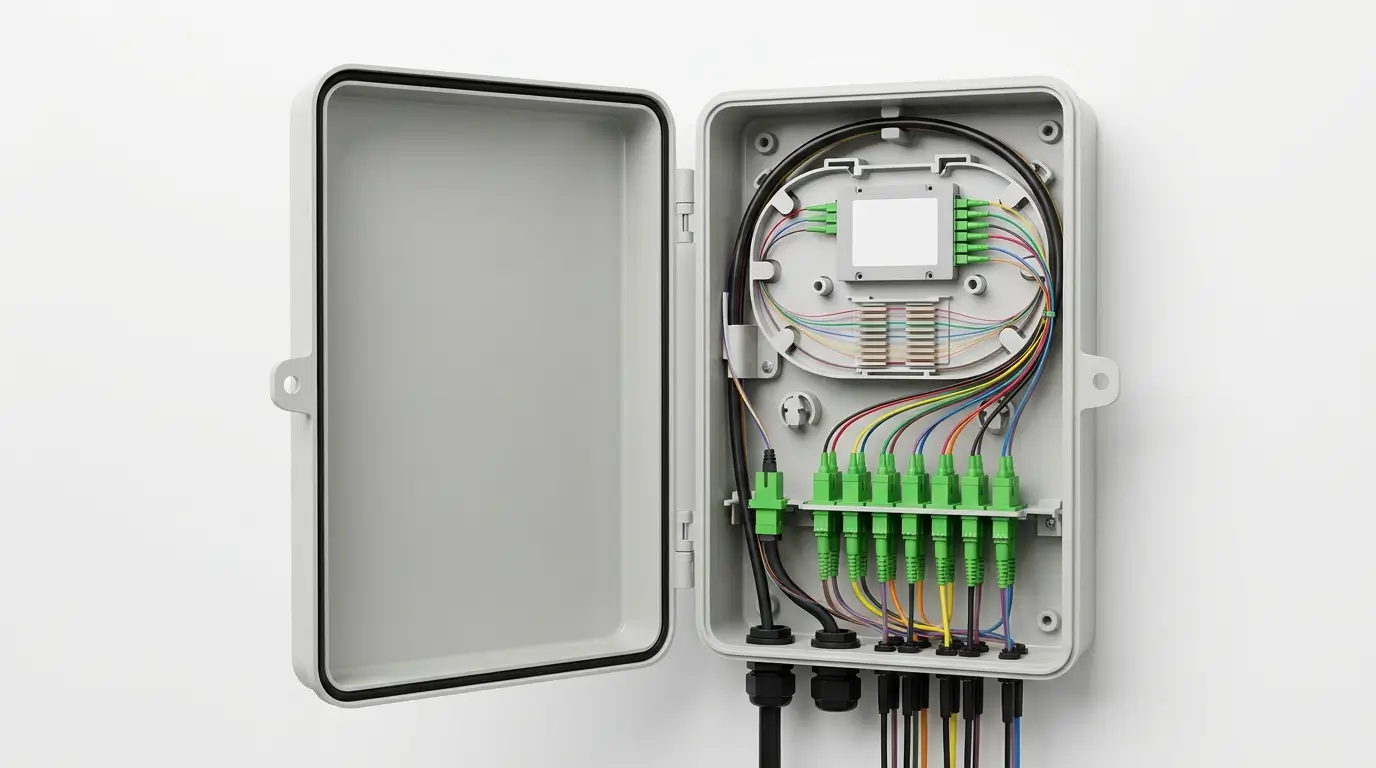
What Is Inside an FDB/NAP Box

Most boxes share the same internal layout:

  • Cable entry ports: Seal and hold the incoming distribution cable and outgoing drop cables
  • Splice tray: Organizes and protects fusion splices between the distribution fibers and pigtails
  • PLC splitter: Divides one input signal into several outputs, commonly 1×8 or 1×16. See our guide to PLC vs FBT splitters for why PLC is the standard here.
  • SC adapters: Provide plug-in connection points for customer drops, usually SC/APC
  • Fiber management: Routing rings and slack storage that protect the minimum bend radius
  • Gasket and lock: Keep out dust and water, and prevent unauthorized access

Some models carry the splitter inside the box. Others are splice-and-patch only, with splitting done upstream.

How an FDB/NAP Box Works

The process is straightforward:

  1. The distribution cable enters the box and is secured with strain relief.
  2. Its fiber is fusion-spliced to a pigtail and organized in the splice tray.
  3. The pigtail connects to the input of a PLC splitter.
  4. The splitter divides the light equally across its output ports.
  5. Each output connects to an SC adapter on the panel.
  6. A pre-connectorized or field-terminated drop cable plugs into an adapter and runs to the home.

Because splitting happens passively, the signal simply divides. Each split adds loss: roughly 3.5 dB for 1×2, 10.5 dB for 1×8, and 13.7 dB for 1×16, so the splitter ratio must fit within the network’s loss budget.

Why Operators Use Them

  • Cost efficiency: One feeder fiber serves many subscribers
  • Flexible rollout: Install the box once, then activate customers as they sign up
  • Easy service: New connections need only a drop cable and an adapter port
  • Fault isolation: Problems can be traced to a single branch
  • Low maintenance: No power supply, no active parts

Types of FDB/NAP Boxes

By capacity: Common sizes are 4, 8, 12, 16, 24, and 48 ports. Choose based on homes passed per box and planned take-up rate.

By mounting method:

  • Pole-mounted for aerial routes
  • Wall-mounted for buildings and indoor risers
  • Underground/handhole for buried networks
  • Cabinet-style for larger street distribution

By configuration:

  • Splitter-loaded: Splitter and adapters integrated
  • Splice-only: For customer-defined splitting
  • Pre-terminated: Factory-prepared for faster installation

How to Choose the Right Box

  • Match the port count to the area. Overfilling the box causes cramped fiber and hard servicing. Leave a few spare ports for growth.
  • Check the protection rating. Outdoor boxes should carry at least IP65, and IP67 for flood-prone or underground use. Dust and moisture are the leading causes of long-term failure.
  • Consider the material. UV-stabilized ABS or PC+ABS handle sun and temperature swings, while metal suits heavy-duty or vandal-prone areas. Flame-retardant material may be required in some regions.
  • Verify the connector type. APC adapters are the PON standard. Confirm compatibility with your splitters and drop cables. If unsure, review SC/UPC vs SC/APC.
  • Plan the cable management. Look for good bend-radius control, slack storage, and tray space for the splice count you need.
  • Think about installation. Confirm the mounting kit, the cable entry design, and whether you need pole straps, wall screws, or a lock.

Installation Tips

  • Mount at a reachable but secure height, and keep entries facing downward to shed water
  • Seal all unused cable ports completely
  • Test each splice and port with a power meter or OTDR, as covered in our OTDR guide
  • Clean every connector before mating
  • Label each port to match your records
  • Leave service loops so you never strain a fiber

Common Mistakes

  • Underestimating loss: Forgetting splitter, splice, and connector loss in the budget
  • Using the wrong adapter polish: Mixing APC and UPC components
  • Poor sealing: Gaps around cables let water in
  • Crowded fiber: Tight bends increase attenuation
  • No labeling: Slows every future repair

Conclusion

The FDB/NAP box is the quiet workhorse of FTTH. It takes a single distribution fiber, splits it passively, and hands off clean connections to each home. Select the right capacity, protection rating, and mounting style, keep the loss budget in check, and label everything, and your last-mile network will be easy to build, expand, and maintain.

Are FDB and NAP the same thing?

In most cases, yes. Names differ by region and operator, but both describe a fiber distribution point near subscribers.

Does an FDB/NAP box need power?

No. It is entirely passive.

What splitter ratio is common in a NAP box?

1×8 and 1×16 are widely used, though 1×4 and 1×32 also appear depending on design.

Can one box serve multiple homes?

Yes. That is its purpose. A 16-port box can connect up to 16 subscribers.

What IP rating should I look for?

IP65 minimum for outdoor use; IP67 where water exposure is likely.

Can I add customers later?

Yes. Unused ports stay capped until a drop cable is installed.

Leave a Reply

Your email address will not be published. Required fields are marked *

XUI CO., LTD
Hello, Please leave your contact information, the staff will give you reply at the very first time.
  • 🇨🇳 China +86
  • 🇺🇸 United States +1
  • 🇨🇦 Canada +1
  • 🇬🇧 United Kingdom +44
  • 🇦🇪 UAE +971
  • 🇸🇦 Saudi Arabia +966
  • 🇩🇪 Germany +49
  • 🇫🇷 France +33
  • 🇮🇹 Italy +39
  • 🇪🇸 Spain +34
  • 🇷🇺 Russia +7
  • 🇮🇳 India +91
  • 🇯🇵 Japan +81
  • 🇰🇷 South Korea +82
  • 🇸🇬 Singapore +65
  • 🇲🇾 Malaysia +60
  • 🇮🇩 Indonesia +62
  • 🇻🇳 Vietnam +84
  • 🇹🇭 Thailand +66
  • 🇵🇭 Philippines +63
  • 🇹🇷 Turkey +90
  • 🇦🇺 Australia +61
  • 🇳🇿 New Zealand +64
  • 🇧🇷 Brazil +55
  • 🇲🇽 Mexico +52
  • 🇿🇦 South Africa +27
  • 🇪🇬 Egypt +20
  • 🇵🇰 Pakistan +92
  • 🇧🇩 Bangladesh +880
  • 🇳🇬 Nigeria +234
  • 🇳🇱 Netherlands +31
  • 🇨🇭 Switzerland +41
  • 🇸🇪 Sweden +46
  • 🇵🇱 Poland +48
  • 🇧🇪 Belgium +32
  • 🇦🇹 Austria +43
  • 🇵🇹 Portugal +351
  • 🇬🇷 Greece +30
  • 🇩🇰 Denmark +45
  • 🇳🇴 Norway +47
  • 🇫🇮 Finland +358
  • 🇮🇪 Ireland +353
  • 🇨🇿 Czech Republic +420
  • 🇭🇺 Hungary +36
  • 🇷🇴 Romania +40
  • 🇮🇱 Israel +972
  • 🇶🇦 Qatar +974
  • 🇰🇼 Kuwait +965
  • 🇴🇲 Oman +968
  • 🇧🇭 Bahrain +973
  • 🇯🇴 Jordan +962
  • 🇱🇧 Lebanon +961
  • 🇮🇶 Iraq +964
  • 🇦🇷 Argentina +54
  • 🇨🇱 Chile +56
  • 🇨🇴 Colombia +57
  • 🇵🇪 Peru +51
  • 🇲🇦 Morocco +212
  • 🇹🇳 Tunisia +216
  • 🇩🇿 Algeria +213
  • 🇰🇪 Kenya +254
  • 🇱🇰 Sri Lanka +94
  • 🇹🇼 Taiwan +886
  • 🇭🇰 Hong Kong +852
  • 🇺🇦 Ukraine +380
  • 🇰🇿 Kazakhstan +7
  • 🇺🇿 Uzbekistan +998
  • 🇦🇿 Azerbaijan +994
  • 🇬🇪 Georgia +995
  • 🇷🇸 Serbia +381
  • 🇭🇷 Croatia +385
  • 💬 WeChat ID (No Dial Code)
  • 🇨🇳 China +86
  • 🇺🇸 United States +1
  • 🇨🇦 Canada +1
  • 🇬🇧 United Kingdom +44
  • 🇦🇪 UAE +971
  • 🇸🇦 Saudi Arabia +966
  • 🇩🇪 Germany +49
  • 🇫🇷 France +33
  • 🇮🇹 Italy +39
  • 🇪🇸 Spain +34
  • 🇷🇺 Russia +7
  • 🇮🇳 India +91
  • 🇯🇵 Japan +81
  • 🇰🇷 South Korea +82
  • 🇸🇬 Singapore +65
  • 🇲🇾 Malaysia +60
  • 🇮🇩 Indonesia +62
  • 🇻🇳 Vietnam +84
  • 🇹🇭 Thailand +66
  • 🇵🇭 Philippines +63
  • 🇹🇷 Turkey +90
  • 🇦🇺 Australia +61
  • 🇳🇿 New Zealand +64
  • 🇧🇷 Brazil +55
  • 🇲🇽 Mexico +52
  • 🇿🇦 South Africa +27
  • 🇪🇬 Egypt +20
  • 🇵🇰 Pakistan +92
  • 🇧🇩 Bangladesh +880
  • 🇳🇬 Nigeria +234
  • 🇳🇱 Netherlands +31
  • 🇨🇭 Switzerland +41
  • 🇸🇪 Sweden +46
  • 🇵🇱 Poland +48
  • 🇧🇪 Belgium +32
  • 🇦🇹 Austria +43
  • 🇵🇹 Portugal +351
  • 🇬🇷 Greece +30
  • 🇩🇰 Denmark +45
  • 🇳🇴 Norway +47
  • 🇫🇮 Finland +358
  • 🇮🇪 Ireland +353
  • 🇨🇿 Czech Republic +420
  • 🇭🇺 Hungary +36
  • 🇷🇴 Romania +40
  • 🇮🇱 Israel +972
  • 🇶🇦 Qatar +974
  • 🇰🇼 Kuwait +965
  • 🇴🇲 Oman +968
  • 🇧🇭 Bahrain +973
  • 🇯🇴 Jordan +962
  • 🇱🇧 Lebanon +961
  • 🇮🇶 Iraq +964
  • 🇦🇷 Argentina +54
  • 🇨🇱 Chile +56
  • 🇨🇴 Colombia +57
  • 🇵🇪 Peru +51
  • 🇲🇦 Morocco +212
  • 🇹🇳 Tunisia +216
  • 🇩🇿 Algeria +213
  • 🇰🇪 Kenya +254
  • 🇱🇰 Sri Lanka +94
  • 🇹🇼 Taiwan +886
  • 🇭🇰 Hong Kong +852
  • 🇺🇦 Ukraine +380
  • 🇰🇿 Kazakhstan +7
  • 🇺🇿 Uzbekistan +998
  • 🇦🇿 Azerbaijan +994
  • 🇬🇪 Georgia +995
  • 🇷🇸 Serbia +381
  • 🇭🇷 Croatia +385
Choose file or drag & drop Excel (.xlsx, .xls), CSV, PDF, Docx (Max 25MB)
Anti-Spam Privacy • Terms

XUI CO., LTD

For your online answer pre-sale (5x8), after sale consulting (7x24) service
Hello, Please leave your contact information, the staff will give you reply at the very first time.
  • 🇨🇳 China +86
  • 🇺🇸 United States +1
  • 🇨🇦 Canada +1
  • 🇬🇧 United Kingdom +44
  • 🇦🇪 UAE +971
  • 🇸🇦 Saudi Arabia +966
  • 🇩🇪 Germany +49
  • 🇫🇷 France +33
  • 🇮🇹 Italy +39
  • 🇪🇸 Spain +34
  • 🇷🇺 Russia +7
  • 🇮🇳 India +91
  • 🇯🇵 Japan +81
  • 🇰🇷 South Korea +82
  • 🇸🇬 Singapore +65
  • 🇲🇾 Malaysia +60
  • 🇮🇩 Indonesia +62
  • 🇻🇳 Vietnam +84
  • 🇹🇭 Thailand +66
  • 🇵🇭 Philippines +63
  • 🇹🇷 Turkey +90
  • 🇦🇺 Australia +61
  • 🇳🇿 New Zealand +64
  • 🇧🇷 Brazil +55
  • 🇲🇽 Mexico +52
  • 🇿🇦 South Africa +27
  • 🇪🇬 Egypt +20
  • 🇵🇰 Pakistan +92
  • 🇧🇩 Bangladesh +880
  • 🇳🇬 Nigeria +234
  • 🇳🇱 Netherlands +31
  • 🇨🇭 Switzerland +41
  • 🇸🇪 Sweden +46
  • 🇵🇱 Poland +48
  • 🇧🇪 Belgium +32
  • 🇦🇹 Austria +43
  • 🇵🇹 Portugal +351
  • 🇬🇷 Greece +30
  • 🇩🇰 Denmark +45
  • 🇳🇴 Norway +47
  • 🇫🇮 Finland +358
  • 🇮🇪 Ireland +353
  • 🇨🇿 Czech Republic +420
  • 🇭🇺 Hungary +36
  • 🇷🇴 Romania +40
  • 🇮🇱 Israel +972
  • 🇶🇦 Qatar +974
  • 🇰🇼 Kuwait +965
  • 🇴🇲 Oman +968
  • 🇧🇭 Bahrain +973
  • 🇯🇴 Jordan +962
  • 🇱🇧 Lebanon +961
  • 🇮🇶 Iraq +964
  • 🇦🇷 Argentina +54
  • 🇨🇱 Chile +56
  • 🇨🇴 Colombia +57
  • 🇵🇪 Peru +51
  • 🇲🇦 Morocco +212
  • 🇹🇳 Tunisia +216
  • 🇩🇿 Algeria +213
  • 🇰🇪 Kenya +254
  • 🇱🇰 Sri Lanka +94
  • 🇹🇼 Taiwan +886
  • 🇭🇰 Hong Kong +852
  • 🇺🇦 Ukraine +380
  • 🇰🇿 Kazakhstan +7
  • 🇺🇿 Uzbekistan +998
  • 🇦🇿 Azerbaijan +994
  • 🇬🇪 Georgia +995
  • 🇷🇸 Serbia +381
  • 🇭🇷 Croatia +385
  • 💬 WeChat ID (No Dial Code)
  • 🇨🇳 China +86
  • 🇺🇸 United States +1
  • 🇨🇦 Canada +1
  • 🇬🇧 United Kingdom +44
  • 🇦🇪 UAE +971
  • 🇸🇦 Saudi Arabia +966
  • 🇩🇪 Germany +49
  • 🇫🇷 France +33
  • 🇮🇹 Italy +39
  • 🇪🇸 Spain +34
  • 🇷🇺 Russia +7
  • 🇮🇳 India +91
  • 🇯🇵 Japan +81
  • 🇰🇷 South Korea +82
  • 🇸🇬 Singapore +65
  • 🇲🇾 Malaysia +60
  • 🇮🇩 Indonesia +62
  • 🇻🇳 Vietnam +84
  • 🇹🇭 Thailand +66
  • 🇵🇭 Philippines +63
  • 🇹🇷 Turkey +90
  • 🇦🇺 Australia +61
  • 🇳🇿 New Zealand +64
  • 🇧🇷 Brazil +55
  • 🇲🇽 Mexico +52
  • 🇿🇦 South Africa +27
  • 🇪🇬 Egypt +20
  • 🇵🇰 Pakistan +92
  • 🇧🇩 Bangladesh +880
  • 🇳🇬 Nigeria +234
  • 🇳🇱 Netherlands +31
  • 🇨🇭 Switzerland +41
  • 🇸🇪 Sweden +46
  • 🇵🇱 Poland +48
  • 🇧🇪 Belgium +32
  • 🇦🇹 Austria +43
  • 🇵🇹 Portugal +351
  • 🇬🇷 Greece +30
  • 🇩🇰 Denmark +45
  • 🇳🇴 Norway +47
  • 🇫🇮 Finland +358
  • 🇮🇪 Ireland +353
  • 🇨🇿 Czech Republic +420
  • 🇭🇺 Hungary +36
  • 🇷🇴 Romania +40
  • 🇮🇱 Israel +972
  • 🇶🇦 Qatar +974
  • 🇰🇼 Kuwait +965
  • 🇴🇲 Oman +968
  • 🇧🇭 Bahrain +973
  • 🇯🇴 Jordan +962
  • 🇱🇧 Lebanon +961
  • 🇮🇶 Iraq +964
  • 🇦🇷 Argentina +54
  • 🇨🇱 Chile +56
  • 🇨🇴 Colombia +57
  • 🇵🇪 Peru +51
  • 🇲🇦 Morocco +212
  • 🇹🇳 Tunisia +216
  • 🇩🇿 Algeria +213
  • 🇰🇪 Kenya +254
  • 🇱🇰 Sri Lanka +94
  • 🇹🇼 Taiwan +886
  • 🇭🇰 Hong Kong +852
  • 🇺🇦 Ukraine +380
  • 🇰🇿 Kazakhstan +7
  • 🇺🇿 Uzbekistan +998
  • 🇦🇿 Azerbaijan +994
  • 🇬🇪 Georgia +995
  • 🇷🇸 Serbia +381
  • 🇭🇷 Croatia +385
Choose file or drag & drop Excel (.xlsx, .xls), CSV, PDF, Docx (Max 25MB)
Anti-Spam Privacy • Terms

Company Overview

Established in 2016 in Ningbo, XUI is a professional manufacturer of fiber optical components and devices, ranging from fiber optical cable, connectors, optical & electrical network cabling, high-speed transmission devices etc. XUI has been providing individualized solutions to our clients at all times.

Wechat