

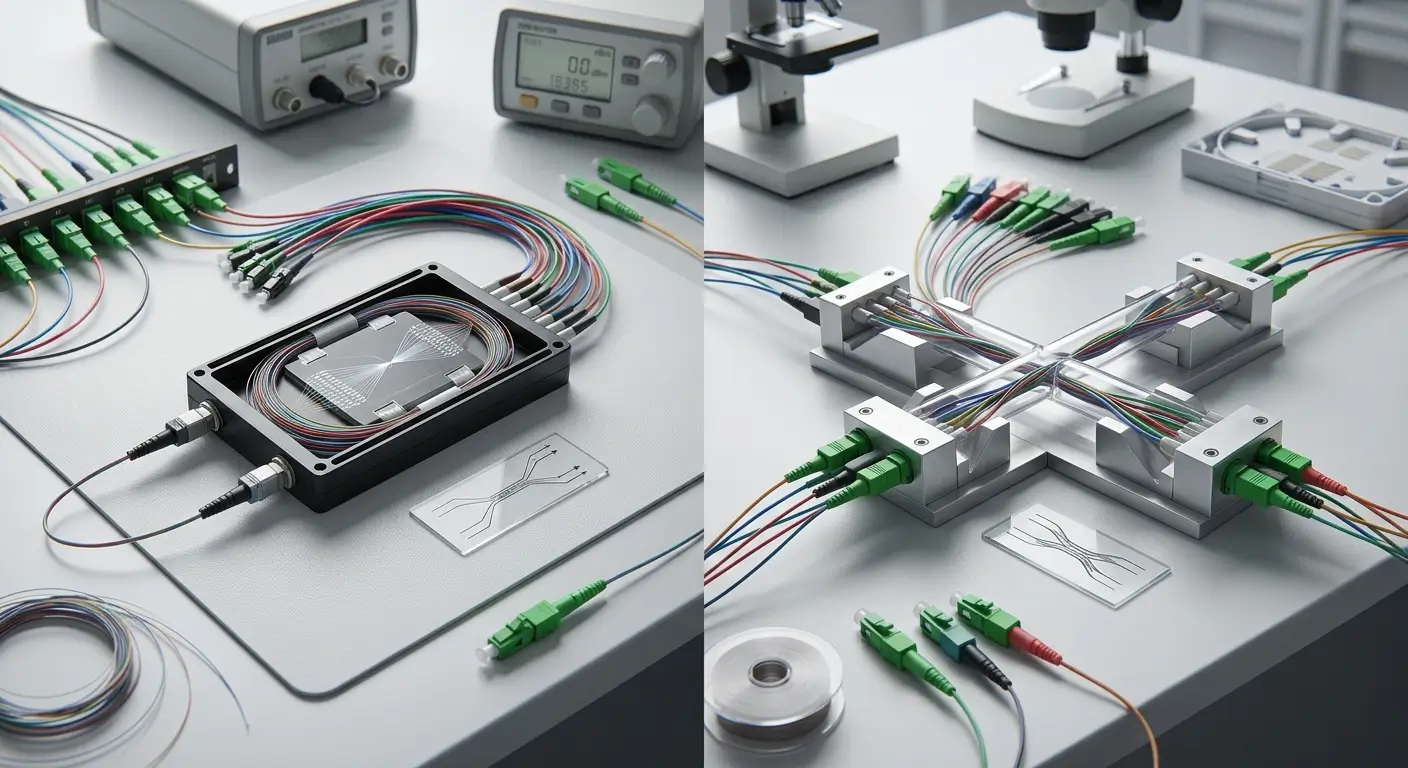
PLC Splitter vs FBT Splitter: Differences and When to Use Each

PLC Splitter vs FBT Splitter: Differences and When to Use Each Leave a comment

PLC Splitter vs FBT Splitter: Differences and When to Use Each. Fiber optic splitters divide one optical signal into multiple outputs, making them essential in FTTH, PON, CATV, and monitoring networks. The two main technologies are the PLC splitter (Planar Lightwave Circuit) and the FBT splitter (Fused Biconical Taper). They are not interchangeable. Choosing the wrong one causes uneven signal distribution, higher loss, or failures in the field.

This guide compares PLC Splitter vs FBT Splitter and shows when to use each.

What Is a PLC Splitter?

A PLC splitter is built on a silica glass waveguide chip. Light entering the input fiber is divided by microscopic waveguide paths etched into the chip, then delivered to fiber arrays at the output.

Characteristics:

  • Equal (uniform) power split across all outputs
  • Wide operating wavelength range: 1260–1650 nm
  • Compact, even at high split ratios (1×16, 1×32, 1×64)
  • Stable across temperature changes
  • Standard for GPON, XGS-PON, and EPON networks

What Is an FBT Splitter?

An FBT splitter (also called a fused biconical taper coupler) is made by heating two or more fibers, stretching them, and fusing them together so light couples between the cores.

Characteristics:

  • Customizable, unequal split ratios (e.g., 90/10, 70/30, 50/50)
  • Optimized for specific wavelengths (commonly 1310 nm, 1550 nm, or both)
  • Low cost at low split counts (1×2, 1×3, 1×4)
  • Larger and less uniform as output count increases
  • More sensitive to wavelength and temperature variation

PLC Splitter vs FBT Splitter: Key Differences

FeaturePLC SplitterFBT Splitter
TechnologyPlanar waveguide chipFused, tapered fibers
Split ratioEqual split onlyEqual or unequal
Practical range1×2 up to 1×64 / 1×128Best up to 1×4
Wavelength1260–1650 nm (broadband)Specific windows
UniformityExcellentDecreases with more outputs
SizeCompactLarger at higher ratios
Temperature stabilityHighModerate
Typical useFTTH, GPON/EPON, FTTxMonitoring, CATV, test equipment

When to Use a PLC Splitter

Choose a PLC splitter when you need:

  • FTTH / PON deployments: Equal power to every subscriber
  • High split ratios: 1×8, 1×16, 1×32, or 1×64
  • Multi-wavelength support: Triple-play and PON upgrades (1310/1490/1550 nm and beyond)
  • Outdoor or variable temperature environments
  • Compact installations: Distribution boxes, NAP boxes, rack-mount panels, and splice closures

When to Use an FBT Splitter

Choose an FBT splitter when you need:

  • Unequal split ratios: e.g., 95/5 or 90/10 for signal monitoring or tapping
  • Low split counts (1×2, 1×3) where cost matters
  • Single-wavelength systems: CATV, sensing, and test equipment
  • Custom or lab applications

Common Packaging Options

PLC Splitter vs FBT Splitter come in several formats, selected by installation environment:

  • Bare fiber / blockless: Compact, for splice trays and small enclosures
  • Steel tube: Added mechanical protection
  • ABS box: Easy handling and labeling
  • LGX cassette / plug-in: Plug-and-play, for patch panels and distribution boxes
  • 1U rack mount: For central offices and data rooms

How to Choose: Quick Decision Guide

  • Need equal split for 4+ outputs? → PLC
  • Need unequal split (e.g., 90/10)? → FBT
  • Using a PON network (GPON/EPON)? → PLC
  • Single wavelength, 1×2, tight budget? → FBT
  • Outdoor/wide temperature range? → PLC
  • Need wideband 1260–1650 nm? → PLC

Installation and Selection Tips

  • Match connector type (SC/UPC vs SC/APC) to your network. Never mix APC and UPC.
  • Calculate the full link loss budget, including splitter loss, connectors, and splices.
  • Verify the splitter’s wavelength range against your equipment.
  • Store and install within the rated temperature range.
  • Clean connectors before mating, and keep bend radius within specification.

Can I replace an FBT splitter with a PLC splitter?

For equal-split applications, yes. For unequal ratios (e.g., 90/10), no. PLC splitters only provide equal splits.

Which splitter is better for FTTH?

PLC. It provides uniform distribution, wideband wavelength support, and compact high-ratio options required by PON networks.

Why is FBT cheaper for 1×2?

The manufacturing process is simpler at low port counts, so it can be more economical for small, single-wavelength applications.

Do PLC splitters work at 1310, 1490, and 1550 nm?

Yes. They cover 1260–1650 nm, supporting GPON, XGS-PON, and video overlay.

What does “blockless” mean?

A blockless PLC splitter is a bare, compact module without a protective housing, used inside enclosures and splice trays.

Conclusion

PLC splitters are the standard for FTTH and PON networks thanks to uniform splitting, broad wavelength coverage, and compact high-ratio designs. FBT splitters remain useful for unequal ratios, low split counts, and single-wavelength applications.


Leave a Reply

Your email address will not be published. Required fields are marked *

XUI CO., LTD
Hello, Please leave your contact information, the staff will give you reply at the very first time.
  • 🇨🇳 China +86
  • 🇺🇸 United States +1
  • 🇨🇦 Canada +1
  • 🇬🇧 United Kingdom +44
  • 🇦🇪 UAE +971
  • 🇸🇦 Saudi Arabia +966
  • 🇩🇪 Germany +49
  • 🇫🇷 France +33
  • 🇮🇹 Italy +39
  • 🇪🇸 Spain +34
  • 🇷🇺 Russia +7
  • 🇮🇳 India +91
  • 🇯🇵 Japan +81
  • 🇰🇷 South Korea +82
  • 🇸🇬 Singapore +65
  • 🇲🇾 Malaysia +60
  • 🇮🇩 Indonesia +62
  • 🇻🇳 Vietnam +84
  • 🇹🇭 Thailand +66
  • 🇵🇭 Philippines +63
  • 🇹🇷 Turkey +90
  • 🇦🇺 Australia +61
  • 🇳🇿 New Zealand +64
  • 🇧🇷 Brazil +55
  • 🇲🇽 Mexico +52
  • 🇿🇦 South Africa +27
  • 🇪🇬 Egypt +20
  • 🇵🇰 Pakistan +92
  • 🇧🇩 Bangladesh +880
  • 🇳🇬 Nigeria +234
  • 🇳🇱 Netherlands +31
  • 🇨🇭 Switzerland +41
  • 🇸🇪 Sweden +46
  • 🇵🇱 Poland +48
  • 🇧🇪 Belgium +32
  • 🇦🇹 Austria +43
  • 🇵🇹 Portugal +351
  • 🇬🇷 Greece +30
  • 🇩🇰 Denmark +45
  • 🇳🇴 Norway +47
  • 🇫🇮 Finland +358
  • 🇮🇪 Ireland +353
  • 🇨🇿 Czech Republic +420
  • 🇭🇺 Hungary +36
  • 🇷🇴 Romania +40
  • 🇮🇱 Israel +972
  • 🇶🇦 Qatar +974
  • 🇰🇼 Kuwait +965
  • 🇴🇲 Oman +968
  • 🇧🇭 Bahrain +973
  • 🇯🇴 Jordan +962
  • 🇱🇧 Lebanon +961
  • 🇮🇶 Iraq +964
  • 🇦🇷 Argentina +54
  • 🇨🇱 Chile +56
  • 🇨🇴 Colombia +57
  • 🇵🇪 Peru +51
  • 🇲🇦 Morocco +212
  • 🇹🇳 Tunisia +216
  • 🇩🇿 Algeria +213
  • 🇰🇪 Kenya +254
  • 🇱🇰 Sri Lanka +94
  • 🇹🇼 Taiwan +886
  • 🇭🇰 Hong Kong +852
  • 🇺🇦 Ukraine +380
  • 🇰🇿 Kazakhstan +7
  • 🇺🇿 Uzbekistan +998
  • 🇦🇿 Azerbaijan +994
  • 🇬🇪 Georgia +995
  • 🇷🇸 Serbia +381
  • 🇭🇷 Croatia +385
  • 💬 WeChat ID (No Dial Code)
  • 🇨🇳 China +86
  • 🇺🇸 United States +1
  • 🇨🇦 Canada +1
  • 🇬🇧 United Kingdom +44
  • 🇦🇪 UAE +971
  • 🇸🇦 Saudi Arabia +966
  • 🇩🇪 Germany +49
  • 🇫🇷 France +33
  • 🇮🇹 Italy +39
  • 🇪🇸 Spain +34
  • 🇷🇺 Russia +7
  • 🇮🇳 India +91
  • 🇯🇵 Japan +81
  • 🇰🇷 South Korea +82
  • 🇸🇬 Singapore +65
  • 🇲🇾 Malaysia +60
  • 🇮🇩 Indonesia +62
  • 🇻🇳 Vietnam +84
  • 🇹🇭 Thailand +66
  • 🇵🇭 Philippines +63
  • 🇹🇷 Turkey +90
  • 🇦🇺 Australia +61
  • 🇳🇿 New Zealand +64
  • 🇧🇷 Brazil +55
  • 🇲🇽 Mexico +52
  • 🇿🇦 South Africa +27
  • 🇪🇬 Egypt +20
  • 🇵🇰 Pakistan +92
  • 🇧🇩 Bangladesh +880
  • 🇳🇬 Nigeria +234
  • 🇳🇱 Netherlands +31
  • 🇨🇭 Switzerland +41
  • 🇸🇪 Sweden +46
  • 🇵🇱 Poland +48
  • 🇧🇪 Belgium +32
  • 🇦🇹 Austria +43
  • 🇵🇹 Portugal +351
  • 🇬🇷 Greece +30
  • 🇩🇰 Denmark +45
  • 🇳🇴 Norway +47
  • 🇫🇮 Finland +358
  • 🇮🇪 Ireland +353
  • 🇨🇿 Czech Republic +420
  • 🇭🇺 Hungary +36
  • 🇷🇴 Romania +40
  • 🇮🇱 Israel +972
  • 🇶🇦 Qatar +974
  • 🇰🇼 Kuwait +965
  • 🇴🇲 Oman +968
  • 🇧🇭 Bahrain +973
  • 🇯🇴 Jordan +962
  • 🇱🇧 Lebanon +961
  • 🇮🇶 Iraq +964
  • 🇦🇷 Argentina +54
  • 🇨🇱 Chile +56
  • 🇨🇴 Colombia +57
  • 🇵🇪 Peru +51
  • 🇲🇦 Morocco +212
  • 🇹🇳 Tunisia +216
  • 🇩🇿 Algeria +213
  • 🇰🇪 Kenya +254
  • 🇱🇰 Sri Lanka +94
  • 🇹🇼 Taiwan +886
  • 🇭🇰 Hong Kong +852
  • 🇺🇦 Ukraine +380
  • 🇰🇿 Kazakhstan +7
  • 🇺🇿 Uzbekistan +998
  • 🇦🇿 Azerbaijan +994
  • 🇬🇪 Georgia +995
  • 🇷🇸 Serbia +381
  • 🇭🇷 Croatia +385

XUI CO., LTD

For your online answer pre-sale (5x8), after sale consulting (7x24) service
Hello, Please leave your contact information, the staff will give you reply at the very first time.
  • 🇨🇳 China +86
  • 🇺🇸 United States +1
  • 🇨🇦 Canada +1
  • 🇬🇧 United Kingdom +44
  • 🇦🇪 UAE +971
  • 🇸🇦 Saudi Arabia +966
  • 🇩🇪 Germany +49
  • 🇫🇷 France +33
  • 🇮🇹 Italy +39
  • 🇪🇸 Spain +34
  • 🇷🇺 Russia +7
  • 🇮🇳 India +91
  • 🇯🇵 Japan +81
  • 🇰🇷 South Korea +82
  • 🇸🇬 Singapore +65
  • 🇲🇾 Malaysia +60
  • 🇮🇩 Indonesia +62
  • 🇻🇳 Vietnam +84
  • 🇹🇭 Thailand +66
  • 🇵🇭 Philippines +63
  • 🇹🇷 Turkey +90
  • 🇦🇺 Australia +61
  • 🇳🇿 New Zealand +64
  • 🇧🇷 Brazil +55
  • 🇲🇽 Mexico +52
  • 🇿🇦 South Africa +27
  • 🇪🇬 Egypt +20
  • 🇵🇰 Pakistan +92
  • 🇧🇩 Bangladesh +880
  • 🇳🇬 Nigeria +234
  • 🇳🇱 Netherlands +31
  • 🇨🇭 Switzerland +41
  • 🇸🇪 Sweden +46
  • 🇵🇱 Poland +48
  • 🇧🇪 Belgium +32
  • 🇦🇹 Austria +43
  • 🇵🇹 Portugal +351
  • 🇬🇷 Greece +30
  • 🇩🇰 Denmark +45
  • 🇳🇴 Norway +47
  • 🇫🇮 Finland +358
  • 🇮🇪 Ireland +353
  • 🇨🇿 Czech Republic +420
  • 🇭🇺 Hungary +36
  • 🇷🇴 Romania +40
  • 🇮🇱 Israel +972
  • 🇶🇦 Qatar +974
  • 🇰🇼 Kuwait +965
  • 🇴🇲 Oman +968
  • 🇧🇭 Bahrain +973
  • 🇯🇴 Jordan +962
  • 🇱🇧 Lebanon +961
  • 🇮🇶 Iraq +964
  • 🇦🇷 Argentina +54
  • 🇨🇱 Chile +56
  • 🇨🇴 Colombia +57
  • 🇵🇪 Peru +51
  • 🇲🇦 Morocco +212
  • 🇹🇳 Tunisia +216
  • 🇩🇿 Algeria +213
  • 🇰🇪 Kenya +254
  • 🇱🇰 Sri Lanka +94
  • 🇹🇼 Taiwan +886
  • 🇭🇰 Hong Kong +852
  • 🇺🇦 Ukraine +380
  • 🇰🇿 Kazakhstan +7
  • 🇺🇿 Uzbekistan +998
  • 🇦🇿 Azerbaijan +994
  • 🇬🇪 Georgia +995
  • 🇷🇸 Serbia +381
  • 🇭🇷 Croatia +385
  • 💬 WeChat ID (No Dial Code)
  • 🇨🇳 China +86
  • 🇺🇸 United States +1
  • 🇨🇦 Canada +1
  • 🇬🇧 United Kingdom +44
  • 🇦🇪 UAE +971
  • 🇸🇦 Saudi Arabia +966
  • 🇩🇪 Germany +49
  • 🇫🇷 France +33
  • 🇮🇹 Italy +39
  • 🇪🇸 Spain +34
  • 🇷🇺 Russia +7
  • 🇮🇳 India +91
  • 🇯🇵 Japan +81
  • 🇰🇷 South Korea +82
  • 🇸🇬 Singapore +65
  • 🇲🇾 Malaysia +60
  • 🇮🇩 Indonesia +62
  • 🇻🇳 Vietnam +84
  • 🇹🇭 Thailand +66
  • 🇵🇭 Philippines +63
  • 🇹🇷 Turkey +90
  • 🇦🇺 Australia +61
  • 🇳🇿 New Zealand +64
  • 🇧🇷 Brazil +55
  • 🇲🇽 Mexico +52
  • 🇿🇦 South Africa +27
  • 🇪🇬 Egypt +20
  • 🇵🇰 Pakistan +92
  • 🇧🇩 Bangladesh +880
  • 🇳🇬 Nigeria +234
  • 🇳🇱 Netherlands +31
  • 🇨🇭 Switzerland +41
  • 🇸🇪 Sweden +46
  • 🇵🇱 Poland +48
  • 🇧🇪 Belgium +32
  • 🇦🇹 Austria +43
  • 🇵🇹 Portugal +351
  • 🇬🇷 Greece +30
  • 🇩🇰 Denmark +45
  • 🇳🇴 Norway +47
  • 🇫🇮 Finland +358
  • 🇮🇪 Ireland +353
  • 🇨🇿 Czech Republic +420
  • 🇭🇺 Hungary +36
  • 🇷🇴 Romania +40
  • 🇮🇱 Israel +972
  • 🇶🇦 Qatar +974
  • 🇰🇼 Kuwait +965
  • 🇴🇲 Oman +968
  • 🇧🇭 Bahrain +973
  • 🇯🇴 Jordan +962
  • 🇱🇧 Lebanon +961
  • 🇮🇶 Iraq +964
  • 🇦🇷 Argentina +54
  • 🇨🇱 Chile +56
  • 🇨🇴 Colombia +57
  • 🇵🇪 Peru +51
  • 🇲🇦 Morocco +212
  • 🇹🇳 Tunisia +216
  • 🇩🇿 Algeria +213
  • 🇰🇪 Kenya +254
  • 🇱🇰 Sri Lanka +94
  • 🇹🇼 Taiwan +886
  • 🇭🇰 Hong Kong +852
  • 🇺🇦 Ukraine +380
  • 🇰🇿 Kazakhstan +7
  • 🇺🇿 Uzbekistan +998
  • 🇦🇿 Azerbaijan +994
  • 🇬🇪 Georgia +995
  • 🇷🇸 Serbia +381
  • 🇭🇷 Croatia +385

Company Overview

Established in 2016 in Ningbo, XUI is a professional manufacturer of fiber optical components and devices, ranging from fiber optical cable, connectors, optical & electrical network cabling, high-speed transmission devices etc. XUI has been providing individualized solutions to our clients at all times.

Wechat